
How to Get a Car Loan on Seasonal Income or EI in Atlantic Canada

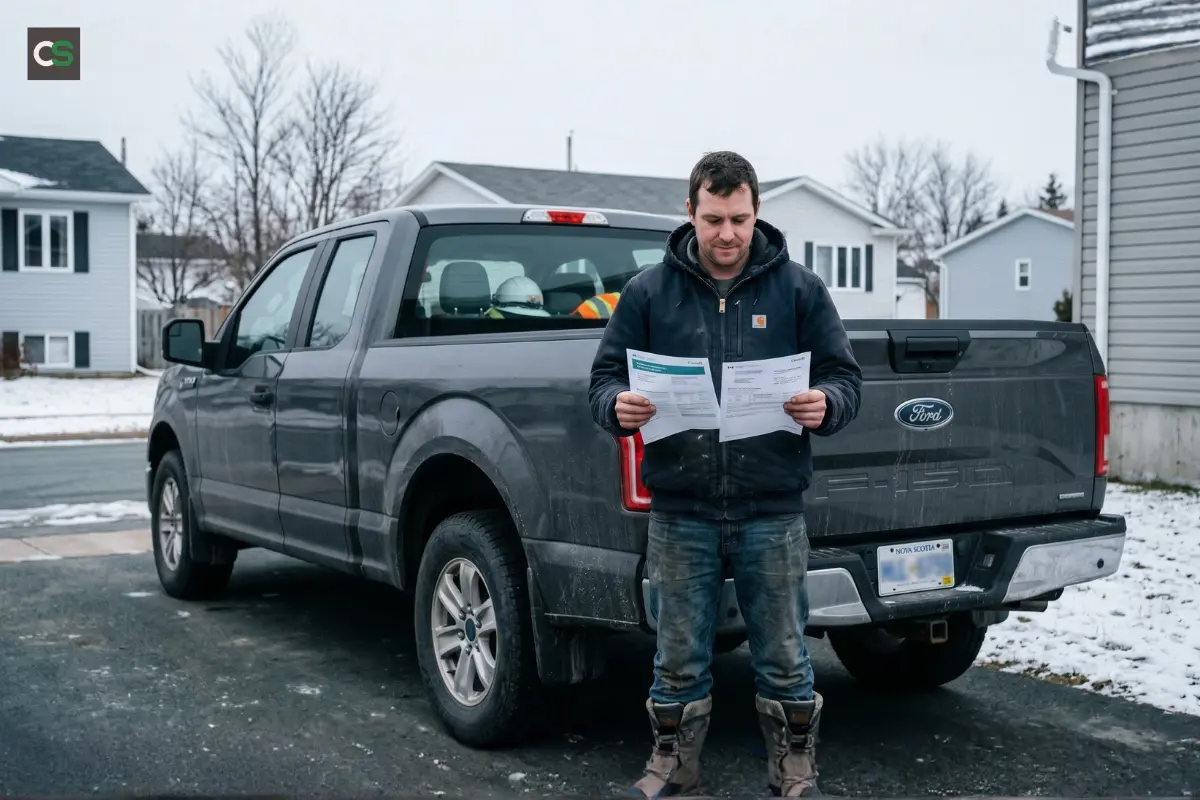
man reading papers of how to get a car loans on seasonal income

Securing a car loan on seasonal income or EI in Atlantic Canada requires moving past the rigid ‘automated box’ of traditional banks. While big banks often reject Employment Insurance as temporary, subprime lenders in the CreditShift network evaluate your 2-year Notice of Assessment (NOA) to prove stability. This guide explains how to navigate Registry of Motor Vehicles (RMV) requirements and use your total annual income to secure an approval, even in the off-season.

Traditional banks often struggle to understand this income pattern.

For example, a lobster fisherman may earn $48,000 during the working season from May to October and receive another $18,000 through EI during the winter months. That gives them a total yearly income of $66,000. But if they apply for financing in January, many banks only see the EI income and may reject the application.

Subprime lenders look at the full yearly income instead of just one month.

To improve approval chances, seasonal workers should prepare the right documents:

  • Two years of Notice of Assessment (NOA)
  • 90 days of bank statements showing steady cash flow
  • Record of Employment (ROE)
  • EI Benefit Statement showing payment amount and duration

The best time to apply is during your active work season because approval chances are usually stronger and interest rates may be lower. But if you apply during the EI period, strong documents can still help you qualify.

At CreditShift, applications are sent to multiple Canadian lenders at once, including lenders experienced with seasonal income and Employment Insurance cases. That helps match Atlantic Canadian workers with financing options that fit their real income situation.

This blog explains you, 

  • how EI and seasonal income work for car loans
  • what documents lenders need
  • when you should apply
  • common mistakes to avoid
  • and how CreditShift helps Atlantic Canadians get approved with seasonal or non-traditional income.

Does EI Count as Income for Getting a Car Loan in Canada?

This is the question every seasonal worker in Nova Scotia, New Brunswick, PEI, and Newfoundland asks first, and most lenders answer it wrong.

The answer is yes, EI counts as income for a car loan, but the lender type determines everything about how it is treated.

How Traditional Banks View EI

Traditional banks RBC, TD, BMO, Scotiabank treat Employment Insurance as temporary income, not stable income. Their underwriting systems are built for salaried, 52-week-a-year employment. When EI appears on an application, most automated systems flag the file and decline it before a human being ever reads it.

According to the Financial Consumer Agency of Canada, lenders assess repayment ability based on income stability and consistency. Traditional institutions define “stability” as year-round, T4 employment. Seasonal workers fall outside that box by definition not because of anything they did wrong, but because the bank’s template was never designed for them.

How Subprime Lenders View EI

Subprime lenders the ones CreditShift works with daily  – evaluate employment insurance auto finance entirely differently. They assess your total annual income picture, not just the slice of the year when you apply.

A subprime lender looks at:

  • How many years have you been doing this seasonal work consistently?
  • Is your EI claim a recurring, predictable event year over year?
  • What is your combined income across both your active season and your EI period?
  • Do your bank statements show a steady, responsible cash flow pattern throughout the year?

Here is what that difference looks like in real numbers:

Income ScenarioTraditional Bank ViewSubprime Lender View
Active season income (May–Oct): $48,000Strong – likely approvedStrong
EI income (Nov–Apr): $18,000Insufficient – likely declinedPart of a $66,000 annual picture
Total annual income: $66,000Depends entirely on when you applyAssessed as full annual income
3 consecutive years same patternRarely changes the outcomeConfirms stability – improves approval odds

A lobster fisherman earning $48,000 in season and $18,000 on EI has a total annual income of $66,000. A subprime lender who understands maritime seasonal jobs vehicle loan applications reads the full $66,000. A traditional bank approached in January often only sees the $18,000 EI period and declines.

The lender you choose matters more than the income you earn.

Get pre-approved with CreditShift in under 3 minutes – one application sent to every major Canadian lender at once.

How Seasonal Workers Can Prove Income to Lenders

Getting approved is often less about your job title and more about how clearly you show your yearly income story. Seasonal workers in Atlantic Canada usually earn good money, but lenders need the right documents to understand how that income works throughout the year.

For a car loan on EI Canada application, simply bringing a pay stub is usually not enough. Subprime lenders want to see stable yearly income, steady cash flow, and proof that your off-season income is part of a normal work cycle, not financial instability.

Here are the documents that matter most and why lenders ask for them.

The Documents That Actually Get You Approved

1. Notice of Assessment (NOA) – 2 Most Recent Years

Your NOA is the single most important document in a seasonal worker auto finance application. It shows your total annual income from all sources – employment earnings and EI benefits combined – on one CRA-verified form.

Do not bring only your T4. A T4 shows employment income only. It completely omits your EI income. This is the document mistake that costs seasonal workers approvals every single day across Atlantic Canada. Two years of NOAs show a consistent income pattern, exactly what a subprime lender needs to approve your file with confidence.

You can download your NOAs instantly through your CRA My Account at canada.ca. Download both before you apply. Do not wait for the lender to ask.

2. Bank Statements – Last 90 Days

Ninety days of bank statements show your actual cash flow. Consistent bi-weekly EI deposits, regular expenses, and no pattern of chronic overdrafts tell a subprime lender far more than a pay stub. Your bank account is a living record of financial behaviour. If your EI arrives reliably every two weeks and your spending is manageable, your statements become some of your strongest evidence of stability.

3. Record of Employment (ROE)

Your ROE confirms the reason your employment ended. “Seasonal layoff” is fundamentally different from “terminated for cause” in a lender’s eyes. The ROE also confirms your insurable earnings and the duration of your employment, giving the lender proof that your EI claim is a predictable, recurring event, not a one-time disruption.

4. EI Benefit Statement

This confirms your current weekly EI benefit amount and how long your claim runs. It answers the lender’s most direct question: how much money is coming in, and for how long? Include this even if you are applying during your active season, it shows the lender what your off-season looks like and confirms you have planned for it.

5. Void Cheque or Pre-Authorized Debit Form

Required by all lenders to set up automatic bi-weekly loan payments. Have it ready at application, it speeds the process.

Full Document Checklist at a Glance

DocumentWhat It ProvesWhere to Get It
Notice of Assessment – 2 yearsTotal annual income: employment + EI combinedCRA My Account at canada.ca
90-day bank statementsReal cash flow, EI deposit pattern, spending habitsOnline banking or branch
Record of Employment (ROE)Seasonal layoff confirmed — not terminated for causeYour employer or Service Canada
EI Benefit StatementCurrent EI amount and duration of claimMy Service Canada Account
Government-issued IDIdentity verificationDriver’s licence or passport
Void chequeLoan payment setupYour bank account

Navigating “Off-Season” Approvals

Timing your application is one of the highest-impact decisions a seasonal worker can make. Most people apply at the wrong time and then blame their income when the real problem was the calendar.

When Is the Best Time to Apply?

Apply while you are still working – not after EI starts. This one timing decision can be the difference between a good rate and a high one.

When you apply during your working season, the lender sees active income on your pay stubs right now. That makes you a much stronger applicant. Your approval chances go up and your interest rate goes down.

When You ApplyWhat the Lender SeesWhat It Means for You
During your work seasonCurrent pay stubs + strong NOA historyBest chance of approval and lowest rate
First month of EI – ROE just issuedEI just started, recent work income still clearGood – lender can see both sides
Middle of EI periodRegular EI deposits in bank statementsWorks – but needs a strong document file
Near the end of EIBenefits running low, no work starting yetHardest to approve – bring everything

If you fish in southwestern Nova Scotia, apply in May or June. If you work summer construction in Moncton, apply in July. If you work a winter ski season in Cape Breton, apply in December when the season just started – not in March when EI is almost finished.

How to Set Up Payments So You Are Not Struggling in Winter

Most car loan guides skip this part. This is the part that actually keeps you from missing a payment in February.

Getting approved is only the first step. The real goal is making sure your car payment still feels manageable during the slower winter months. Seasonal workers in Atlantic Canada often earn high income during busy seasons, but winter cash flow can look very different.

A smart loan setup helps you avoid stress, missed payments, and unnecessary financial pressure when work slows down. Small decisions made before signing your loan can make a big difference later.

Step 1: Match your payment date to your EI deposit

EI arrives every two weeks on a set schedule. Ask your lender to time your loan payment one or two days after each EI deposit hits your account. That way your money is always there when the payment comes out. One phone call before your first payment is all it takes.

To ensure your monthly obligation remains manageable during the winter months, buyers must evaluate three specific variables: your average monthly EI benefit, the total Cost of Borrowing (COB), and your current Debt-to-Income (DTI) ratio.

Step 2: Use the 15% rule

Your monthly loan payment should not be more than 15% of your monthly EI income. If you get $1,800 a month on EI, keep your payment at or below $270. If you get $2,400 a month, stay at or below $360. Use the CreditShift car loan calculator to find the right vehicle price and loan length that keeps you in that range.

Step 3: Pick 60 to 72 months, not 84 to 96

A longer loan like 8 years lowers your monthly payment but costs you a lot more interest over time. It also means you are still paying for a vehicle long after it has aged out. A 5 or 6 year loan is the sweet spot for most seasonal workers in Atlantic Canada.

Step 4: Save one month of payments before you drive away

 EI payments can be delayed sometimes. If your benefit takes an extra week or two to arrive, having one month of loan payments saved means you never miss a due date. Missing a payment early in the loan hurts your credit score right when you are working to build it.

Common Mistakes Seasonal Workers Make When Applying

Most declined applications are not because of the income. They are because of avoidable errors. Here are the ones that cost people approvals most often.

  1. Bringing a T4 instead of NOA. 

Your T4 only shows your work income,  not your EI. A lender who only sees your T4 thinks you earn less than you actually do. Always bring two full years of Notices of Assessment.

  1. Applying to multiple banks one at a time. 

Each time a lender checks your credit, it leaves a mark on your credit file. Applying to five banks separately means five marks, and your score drops each time. CreditShift sends one application to 18+ lenders at once. One credit check. Full market coverage.

  1. Applying when EI is almost finished.

 If your EI is running out and your work season has not started yet, you are presenting yourself at your weakest financial point. If possible, wait until work starts. If you cannot wait, make sure your NOAs and bank statements are complete and clearly show your income pattern.

  1. Picking a vehicle your off-season budget cannot handle. 

A lender looks at your lowest-income month, not your busiest one. If your loan payment is comfortable in July but tight in January, that is a problem. Choose a vehicle with a payment you can manage year-round — not just during peak earning months.

  1. Hiding that your work is seasonal.

 Lenders who work with CreditShift understand seasonal income. Being upfront about your work pattern — and backing it up with the right documents — is always faster than trying to make yourself look like a year-round employee. If the income history comes out anyway during verification, it creates delays and trust issues.

  1. Applying only when your vehicle breaks down. 

Applying in a rush means making decisions under pressure. You might end up with the wrong vehicle, a higher rate, or terms that do not suit you. Apply when you still have time to compare and choose carefully.

Why CreditShift Specializes in Non-Traditional Income

Many traditional lenders are built around one type of borrower someone with the same paycheck, from the same employer, every month of the year. But that is not how many people in Atlantic Canada earn a living.

Fishing, construction, tourism, forestry, and seasonal industries are a normal part of life across the region. Income may change with the seasons, but that does not make it unreliable.

CreditShift understands how seasonal income really works. Instead of focusing on one pay stub, the team looks at your full yearly earning pattern, work history, EI support, and overall financial stability.

That is why CreditShift works with lenders who understand non-traditional income and seasonal employment helping Atlantic Canadians find financing options that fit real life, not just a rigid banking formula.

Seasonal Work Is the Backbone of Atlantic Canada

Millions of Atlantic Canadians work in industries that follow the seasons. The lobster and snow crab fishery alone brings in over $2 billion a year in Atlantic Canada (DFO, 2023). Add forestry, construction, tourism, and agriculture and you have an enormous workforce that earns well but earns differently. These workers deserve fair access to vehicle financing, not a rejection letter from an algorithm that does not understand how they live.


What CreditShift Does That Banks Do Not?

One application reaches every lender.

How You ApplyNumber of LendersCredit ChecksAccepts Seasonal Income
One traditional bank11 per bankRarely
Five banks separately55 separate checksRarely
Through CreditShift18+ lendersJust 1 checkYes – lenders built for this

When you apply through CreditShift, your file goes to specialist lenders including Carfinco, Rifco, Westlake Financial, and General Bank of Canada. These lenders work with employment insurance auto finance files every day. They know how to read a seasonal income file. They know what an Atlantic fishing season looks like. They approve files that big banks send back without a second look.

You pick from a 100+ dealer network. Once you are approved, CreditShift connects you with a dealer across Nova Scotia, New Brunswick, PEI, or Newfoundland. You choose a vehicle that fits your budget. No hard sell. No finance office pressure. No one telling you your EI is not good enough.

Every payment builds your credit. Each payment you make is reported to Equifax and TransUnion. After 10 to 12 months of on-time payments, most clients see a real improvement in their credit score. That means a better rate next time — and more options going forward.

If you want to know, how your credit score affect your loan terms? You can check this How Much Credit Score Do You Need for a Car Loan in Canada.

The Bottom Line on Car Loans for Seasonal Workers in Atlantic Canada

Getting a car loan as a seasonal worker in Canada is not as hard as the banks make it seem. Tens of thousands of Atlantic Canadians do it every year – with the right lender and the right documents.

Traditional banks are not built for your income pattern. Specialist lenders, reached through CreditShift, are.

Four things decide your outcome:

  1. What you bring. Two NOAs, 90 days of bank statements, your ROE, and your EI Benefit Statement. Together, these tell a complete income story.
  2. When you apply. During your work season gives you the best rate and the best odds. During EI, strong documents do the work for you.
  3. What vehicle you choose. Keep the payment at a level your EI income can handle – not just your peak season earnings.
  4. Who you apply with. CreditShift sends your file to every specialist lender at once. One application. No repeated credit checks.

Your next four steps:

  1. Download your last two NOAs from CRA My Account
  2. Pull 90 days of bank statements from your bank
  3. Have your ROE and EI Benefit Statement ready
  4. Apply with CreditShift – 3 minutes, no obligation, no hard credit check to start

One application. Every Canadian lender. The approval that fits how you actually work.

Common FAQs on Car Loans for Seasonal Workers in Canada

What’s the easiest car finance to get for seasonal workers in Canada?

The easiest path to car loans for seasonal workers in Canada is through specialist lenders – not traditional banks. These lenders accept EI and seasonal income when you bring the right documents, mainly two years of NOAs and 90 days of bank statements. CreditShift sends one application to all of them at once – no multiple credit checks, no going from bank to bank. If you are a first-time borrower or have a thin credit history, our first-time SUV financing guide for Atlantic Canada explains how lenders look at files like yours.

Which Canadian bank is best for an auto loan on seasonal income?

Honestly, traditional Canadian banks – RBC, TD, BMO, Scotiabank, CIBC – are not the best option for seasonal workers. They are set up for people with year-round salaries. Specialist lenders like Carfinco, Rifco, and Westlake Financial, which you can reach through CreditShift, approve the seasonal and EI income files that big banks turn down. They are faster, more flexible, and they actually understand how Atlantic Canadians earn.

Which finance is best for a vehicle loan if I have seasonal income?

Going through a specialist broker like CreditShift is your best move. CreditShift sends your file to every lender that fits your income profile — all at once. Before you apply, run the numbers on the CreditShift car loan calculator to find a payment that works during your slowest income months. If you want to understand how the whole car loan process works first, start with our understanding car loans guide.

Does EI count as income for getting a car loan in Canada?

Yes, with the right lender and the right paperwork. Specialist lenders accept EI as valid income for a car loan on EI Canada when you provide two years of Notices of Assessment, 90 days of bank statements showing regular EI deposits, a Record of Employment confirming you were laid off seasonally, and a current EI Benefit Statement. 

Do I need a co-signer if my income drops during the winter off-season?

Not always. A co-signer can help you get approved and may get you a lower interest rate, but many seasonal workers get approved without one. Specialist lenders look at your full annual income from your NOAs, not just what you are earning right now in winter. A solid document file often removes the need for a co-signer entirely. If your credit score is below 550, adding a co-signer with better credit will make a real difference to your rate. For more on this, our zero down payment car loan guide for Nova Scotia breaks down how co-signers and down payments work together.


Finding the Red Book Value for Used Cars in Nova Scotia: 2026 Blueprint

Nova Scotia buyer reviewing Red Book Tax info.

Short Summary: 

When you buy a used car through a private sale in Nova Scotia, Access Nova Scotia charges the Nova Scotia Sales Tax (NSST) at 14% on the greater of what you paid or the Canadian Red Book value. The Canadian Red Book is a nationally recognized vehicle valuation database powered by CARFAX Canada. If the Red Book value seems too high, you can hire a licensed appraiser and submit the Motor Vehicle Appraisal Record within two months of purchase to potentially lower your tax bill.

Buying a used car privately in Nova Scotia can feel simple until you get to the Registry of Motor Vehicles and discover you owe tax on a number higher than what you paid. 

That number comes from the Canadian Red Book, and it can catch buyers off guard. Understanding how the Red Book value Nova Scotia system works in 2026 is the key to protecting your wallet before you ever sign a bill of sale.

Here we present a complete blueprint that explains exactly how Access Nova Scotia uses the Canadian Red Book, what you can do if the value seems wrong, when you pay zero tax on a family car gift, and why buying through a dealer changes your tax situation entirely. 

Whether you are in Halifax, Dartmouth, Sydney, or anywhere across the province, the same rules apply to every private car sale.


What Is the Canadian Red Book and Why Does Nova Scotia Use It?

The Canadian Red Book is a vehicle valuation tool powered by CARFAX Canada and used by governments, insurance companies, financial institutions, and appraisers across the country. 

It lists average wholesale values for used vehicles based on make, model, year, trim, and mileage. Nova Scotia, along with New Brunswick and several other provinces, uses it as the official baseline for calculating sales tax on privately sold vehicles.

Because private sellers do not collect HST at the point of sale, Access Nova Scotia steps in during the registration process and applies the NSST to whichever is greater

The government treats the Red Book as a safeguard against underreported sales prices. A free Red Book value check for Atlantic Canada is not publicly available directly on the Canadian Red Book website without a subscription, but your local Access Nova Scotia office can look up the value at the time of registration.


How Access Nova Scotia Uses the Canadian Red Book

Access Nova Scotia applies the Red Book value Nova Scotia rule at the point of vehicle registration for every private sale. 

The Registry of Motor Vehicles looks up your vehicle by its VIN number, finds the Canadian Red Book average wholesale value for that specific vehicle, and then compares it to the purchase price on your bill of sale.

Nova Scotia charges NSST on used cars at 14% (down from 15% as of April 1, 2025). That 14% is applied to the sale price or the Red Book figure. 

If you paid $10,000 for a car but the Red Book value is $13,500, you pay tax on $13,500. It is how the Access Nova Scotia private sale tax works in practice.

Scenario Taxable Amount NSST Owing (14%)
You paid $10,000, Red Book = $10,000 $10,000 $1,400
You paid $10,000, Red Book = $13,500 $13,500 $1,890
You paid $14,000, Red Book = $13,500 $14,000 $1,960
Red Book wholesale = $1,000 or less Your purchase price only 14% of the purchase price

Vehicles with a Red Book wholesale price of $1,000 or under are taxed only on the declared purchase price, with no Red Book comparison applied.


What Happens If You Pay Less Than Red Book Value in Nova Scotia?

It is the scenario that most private buyers find surprising. If you negotiated a deal and paid less than the Canadian Red Book average wholesale value, you still owe NSST on the Red Book figure, not your purchase price. 

So if you paid $8,000 for a car that the Red Book values at $11,000, Access Nova Scotia will calculate your tax on $11,000.

A $3,000 difference at 14% adds $420 to your registration bill that you didn’t expect. It is why knowing how Nova Scotia calculates tax on used cars before you finalize a deal is so important. 

The Red Book value Nova Scotia system exists to prevent sellers and buyers from artificially reporting low sale prices to reduce tax. 

Honest buyers can still be caught out by the Red Book when a car is genuinely worth less than its listed wholesale average due to condition, damage, or high mileage.


Three Steps to Dispute an Inaccurate Red Book Valuation

You are not stuck with a Red Book figure that does not reflect your vehicle’s true condition. The Nova Scotia government gives buyers the legal right to challenge the valuation using a licensed appraiser. 

Here is exactly how to do it.

Step 1. Hire a Licensed Vehicle Appraiser

The province requires that your appraisal be completed by either a licensed car dealer or an appraiser registered with the Nova Scotia Provincial Tax Commission

Unregistered appraisers are not accepted, and the appraisal must be completed within two months of the date you purchased or registered the vehicle. 

In Halifax, used-car appraisal services are available at many licensed dealerships. The appraiser will physically inspect the vehicle and assign a fair market value based on condition, mileage, and local market data.

There is no government fee to submit the appraisal form. However, the appraiser may charge a fee for their service. 

Even a modest fee can save you hundreds of dollars in NSST if the Red Book figure is significantly higher than your car’s actual condition warrants.

Step 2. Complete the Motor Vehicle Appraisal Record

Your licensed appraiser will complete the official Motor Vehicle Appraisal Record, which is the government form used to challenge the Red Book figure. 

The form captures the appraiser’s assessed value and their registration credentials with the Provincial Tax Commission

The appraised value replaces the Red Book number as your taxable basis, provided the appraisal was completed within the required 2-month window.

Access Nova Scotia will then calculate your purchase price or the appraiser’s value. If the appraiser confirms the vehicle is worth less than the Red Book figure, you pay tax on the lower appraised amount rather than the Red Book wholesale average. 

It is the only official method for reducing vehicle sales tax on private purchases in Halifax and across Nova Scotia.

Step 3. Submit the Form Before Transferring Ownership

Bring the completed Motor Vehicle Appraisal Record to your nearest Access Nova Scotia location when you go to register the vehicle. 

The form must be presented during the registration process. You cannot submit it after registration is complete and then claim a refund retroactively based on a later appraisal.

Make sure you have your signed bill of sale, the vehicle’s existing registration certificate, and your proof of insurance ready at the same time. 

Access Nova Scotia staff will review the appraisal form and apply the correct NSST rate to your transaction on the spot. There is no cost to submit the form itself, and the tax savings are applied immediately at the counter.


How to Find the Red Book Value Before You Register

Many buyers want to know the Canadian Red Book value before they finalize a private deal. The Canadian Red Book, powered by CARFAX Canada, requires a paid subscription for full access. 

There is no completely free Red Book value check for Atlantic Canada that gives you the exact number Access Nova Scotia will use. However, several reliable alternatives help you estimate where your vehicle sits:

  • Ask a licensed dealer: Any licensed dealership in Nova Scotia can look up the Red Book wholesale value as part of their access to trade publications.
  • Use the Access Nova Scotia car tax calculator: The province does not publish an online Red Book lookup, but your local registry office can tell you the figure before you register.
  • Request a pre-purchase appraisal: Hire a registered appraiser before you buy to determine the likely tax bill.

Use trade-in value calculators, such as the NS resources available through major Canadian automotive platforms, to get a rough market baseline.


Family Exemptions: Avoiding the Sales Tax Entirely

Nova Scotia provides a full NSST exemption on gifted vehicles transferred between qualifying immediate family members

It means the recipient pays zero tax at registration, regardless of the Red Book value Nova Scotia assigns to the vehicle.

To qualify for the family gift exemption, both parties must be Nova Scotia residents, and you must submit a Sworn Statement for a Family Gift of a Used Motor Vehicle in the Province of Nova Scotia at the time of registration. 

The sworn statement must be witnessed by a lawyer, commissioner, notary public, or a Registry of Motor Vehicles staff member. 

Additionally, the vehicle must not have already been transferred tax-free to another immediate family member within the previous 12 months.

Qualifying immediate family members for the exemption include:

  • Spouse or common-law partner
  • Parent or stepparent
  • Child or stepchild
  • Sibling
  • Grandparent or grandchild
  • Former common-law partners transferring a vehicle as part of relationship dissolution (where no written separation agreement exists)

Cousins, aunts, uncles, and friends do not qualify. If you transfer a vehicle to someone outside this list, NSST applies in full based on the Red Book value or purchase price, whichever is greater. 

A vehicle received as an inheritance from an estate also qualifies for a separate tax exemption, using the Sworn Statement for the Inheritance of a Used Motor Vehicle in the Province of Nova Scotia form.


Trade-Ins vs. Private Sales: The Tax Advantage of Dealerships

One of the most underappreciated financial advantages of buying through a dealership rather than a private seller is how sales tax is applied. 

When you buy a used vehicle from a licensed dealership in Nova Scotia, the dealer collects HST on the transaction price, and critically, the Red Book value comparison does not apply. You pay HST only on what you actually pay the dealer.

Furthermore, if you trade in a vehicle at a dealership, the trade-in value is deducted from the purchase price of your new vehicle before HST is calculated.

It can deliver significant savings. Here is what that looks like in real numbers:

Private Sale Scenario Dealership Trade-In Scenario
Buy a $20,000 used car privately Buy a $20,000 used car at a dealer, trade it in worth $5,000
Red Book may value it at $22,000 Taxable amount = $20,000 minus $5,000 = $15,000
NSST = 14% of $22,000 = $3,080 HST = 14% of $15,000 = $2,100
No trade-in credit possible You save $980 in tax versus the private scenario above

It is one of the key reasons why working with a dealership or a financing broker can make more financial sense than buying privately, especially when your vehicle has meaningful trade-in value.

Learn a detailed comparison of how auto dealerships and financing companies differ in Atlantic Canada and see which approach puts more money back in your pocket.


Common Mistakes Nova Scotia Buyers Make With the Red Book Tax

Thousands of Nova Scotia buyers walk into Access Nova Scotia unprepared each year. Here are the most common and costly errors to avoid:

  • Not budgeting for the Red Book difference: Budget for NSST on the Red Book value, not just what you agreed to pay the seller.
  • Missing the two-month appraisal window: If you believe the Red Book overvalues your vehicle, act immediately. Waiting too long forfeits your right to challenge it.
  • Using an unregistered appraiser: Only dealers or appraisers registered with the Provincial Tax Commission are accepted. A friend’s opinion or an online estimate will not be accepted by Access Nova Scotia.
  • Assuming a family transfer is automatically tax-free: You still need to submit the sworn statement and meet all conditions. Simply being related is not enough.
  • Forgetting about the Red Book when the car has damage: If your private purchase has body damage, rust, or mechanical issues, a registered appraisal might bring the taxable value well below the Red Book figure and save you real money.


Professional Valuation Standards: Why the RMV Trusts the Red Book

The Canadian Red Book is the gold standard for vehicle values because it uses actual transaction data from across Atlantic Canada. 

Unlike free online estimators that guess a price based on asking prices, the Red Book tracks what cars actually sell for at wholesale auctions. 

It is why Access Nova Scotia uses it as its primary tool for tax collection. It creates a fair playing field for everyone in Halifax and Sydney.

Experience with High Mileage and Mechanical Defects

If you buy a car with a blown engine or 400,000 kilometres on it, the standard Red Book wholesale value will be too high. 

A standard clerk at the Registry of Motor Vehicles cannot change the number on their screen just because you show them a photo of a dent. 

It is where professional expertise matters. A licensed appraiser examines the specific mechanical failures that the Red Book software cannot detect.


Calculating the True Cost of Ownership: Tax vs Interest

Many buyers focus so hard on the purchase price that they forget about the hidden costs of a private sale.
When you buy privately, you must pay the 14 percent NSST upfront in cash at the registry office. If you do not have 3,000 dollars in your bank account for taxes and registration, a private deal can fall apart.

Financial Strategy: Rolling Tax into a Managed Loan

At CreditShift, we help you avoid the stress of a massive upfront tax bill. Because we work with a network of licensed dealers, the 14 percent tax is included in your total financing package. 

It means you do not have to drain your savings at the Access Nova Scotia counter. You get a fully inspected vehicle, and the tax is handled transparently as part of your monthly payment.


Comparing Appraiser Credentials: Who Can Legally Help You?

Not everyone with a mechanic shop can sign a Motor Vehicle Appraisal Record. To build trust with the Provincial Tax Commission, the person must be a registered appraiser or a licensed dealer. 

Using an unauthorized person will result in your claim being rejected. Always check your appraiser’s registration number before you pay them for a valuation.

Red Book Exemptions for Unique Vehicles

There are specific cases where the Red Book does not apply. This includes very old classic cars or custom-built vehicles that do not appear in the standard database. 

In these cases, the government relies entirely on a professional appraisal. If you are buying a unique vehicle in Nova Scotia, getting an appraisal before you visit the registry is the only way to ensure a smooth registration process.


Expert Tips on The 60 Day Deadline for Tax Refunds

If you already paid the high tax at the registry but believe the car was worth less, you have a small window to fix it. 

You have 60 days from the date of registration to submit a professional appraisal and request a refund for the overpaid tax. 

It is a crucial safety net for Nova Scotia buyers who were caught off guard by the Red Book value at the counter.

Why CreditShift Prioritizes All-In Transparency

We believe that no one should ever be surprised by a tax bill. Our team calculates the exact provincial tax before you sign any documents.
We compare the dealer price against regional data to ensure you are getting a fair deal. By choosing a managed financing path, you gain the protection of a professional team that understands the Nova Scotia Motor Vehicle Act inside and out.


The Bottom Line on Red Book Value Nova Scotia in 2026

The Red Book value Nova Scotia system exists to ensure everyone pays their fair share of sales tax on used vehicle transactions. 

As a buyer in a private sale, the most important things you can do are: know the Red Book value before you commit to a deal, budget for tax on the higher of the two numbers, act quickly if you want to dispute the value with a licensed appraisal, and understand that family gifts and dealership trade-ins come with significant tax advantages.

Whether you are shopping for a truck in Truro, a sedan in Sydney, or an SUV in Halifax, the Canadian Red Book value will determine a significant portion of your total ownership cost.

Going in with the right information means no surprises at the Access Nova Scotia counter and more money staying in your pocket where it belongs.


Frequently Asked Questions on Red Book Value Nova Scotia in 2026


Do I pay tax on the purchase price or the Red Book value?

You pay Nova Scotia Sales Tax on whichever is greater: your purchase price or the Canadian Red Book wholesale value.

How do I dispute a high Red Book value in Nova Scotia?

Hire a registered appraiser within two months, complete the Motor Vehicle Appraisal Record, and submit it at Access Nova Scotia during registration.

Do family members pay sales tax on gifted cars?

No. Immediate family members in Nova Scotia pay zero NSST on gifted vehicles when a sworn statement is submitted at registration.

Where do I find the Canadian Red Book value for free?

Ask any licensed Nova Scotia dealer or visit an Access Nova Scotia office. The website itself requires a paid subscription for full access.

Does a private seller charge sales tax in Nova Scotia?

No. The private seller does not collect tax. The buyer pays NSST directly to Access Nova Scotia at the time of vehicle registration.

Can I get a refund if I overpaid NSST on a private vehicle purchase?

Yes. If you believe NSST was collected in error, you can apply for a refund through the Nova Scotia Sales Tax program at Access Nova Scotia.

What is the NSST rate on used cars in Nova Scotia in 2026?

The current NSST rate is 14%, reduced from 15% as of April 1, 2025, matching the provincial HST rate reduction.

Does the Red Book value apply to motorcycles and ATVs?

Motorcycles and off-road vehicles use the Canadian Sport Vehicle Blue Book rather than the Red Book in Atlantic Canada.

How to Get a Zero Down Payment Car Loan in Nova Scotia: 2026 Blueprint

Nova Scotia woman holding zero down car keys.

Short Summary: 

You can get a zero-down payment car loan in Nova Scotia with a minimum monthly income of $1,600 and a credit score as low as 300 through subprime lenders. Lenders prioritize stable employment over credit history. CreditShift Auto Solutions submits your single application to every major Canadian lender simultaneously, giving Atlantic Canadians the best chance at $ 0-down auto financing regardless of their credit profile.

The number one reason people in Halifax, Dartmouth, and across Atlantic Canada do not apply for a car loan is the assumption that they need cash up front. 

That assumption is wrong. A zero-down payment car loan in Nova Scotia is a real option for people with bad credit, thin credit files, and even past bankruptcies. The key is understanding what lenders actually look for and choosing the right path to approval.

Our blueprint here covers every step of the process in plain language. You will learn the income threshold you need to clear, the exact documents required, what monthly costs to expect with zero down, the very real dangers of buy-here-pay-here lots, and why CreditShift is the safest and most effective option for no-money-down car dealerships in Atlantic Canada.


Does a Zero Down Payment Car Loan Really Exist in Nova Scotia?

Yes. A zero-down payment car loan in Nova Scotia is a legitimate financing product offered by subprime lenders, credit unions, and auto financing brokers. 

When a dealership or lender advertises $0 down or no money down financing, they are rolling the full purchase price of the vehicle into your loan. You drive away without paying anything up front, but you finance a larger total amount.

Instant approval, $0 down car loans are available to buyers with incomes as low as $1,600 per month. 

Credit scores as low as 300 can still qualify you for subprime loans. The critical factor most people do not realize is that lenders weigh income stability and consistent employment more heavily than credit score alone when evaluating zero-down applications. 

A person earning $2,200 per month with a 520 credit score has a strong chance of approval if their employment history is steady.


The Income Rule: Overriding Bad Credit with Pay Stubs

Income is the single most powerful lever available to a bad-credit borrower seeking a zero-down-payment car loan in Nova Scotia. 

Lenders approve subprime auto loans without a deposit based on your proven ability to make consistent monthly payments, and that ability comes from your income, not your past credit mistakes.

The general minimum income threshold in Nova Scotia is $1,600 per month in verifiable take-home income. 

Most subprime lenders prefer to see a monthly income of $1,800 to $2,200 for zero-down approvals. 

The reason is simple. With no down payment, the lender takes on more risk, and your income is their primary safety net. Lenders use a debt-to-income calculation to ensure your new car payment does not exceed roughly 15% to 20% of your gross monthly income.

Monthly Income Max Recommended Car Payment (20%) Zero Down Eligibility Signal
$1,600 $320 Minimum threshold, tight approval
$1,800 $360 Solid baseline for most lenders
$2,200 $440 Strong approval signal, more vehicle options
$2,800+ $560+ Best terms, wider lender selection

Self-employed buyers and those on contract work can still qualify. Lenders in this case look for 12 to 24 months of bank statements showing consistent income deposits. 

Employment insurance income, disability benefits, and pension income are also accepted by many subprime lenders in Atlantic Canada when combined with a stable residency history.


What Credit Score Do You Need for a Zero Down Car Loan in Nova Scotia?

There is no hard floor on credit scores for a zero-down payment car loan in Nova Scotia when you apply through a subprime auto lender.

Canadian credit scores range from 300 to 900. Traditional banks require 680 or higher. 

Subprime lenders who specialize in $0 down bad credit auto finance in Halifax approve buyers with scores as low as 300-450, provided income and employment requirements are met.

The lower your credit score, the higher your interest rate will be. A buyer with a 500 score might receive a rate between 14% and 19%, while a buyer with a 650 score might qualify for a rate between 8% and 12%. 

Even so, making every biweekly payment on time means your score will improve within 10 to 12 months, which opens the door to refinancing at a better rate.

To understand exactly how your score affects your loan terms, first determine which score you need for a car loan and see where you currently stand.


Documentation Requirements for $0 Down Approvals

Lenders offering dealerships accepting zero down payment in Nova Scotia require specific documentation before they will process your application. 

Having these ready speeds up your approval from days to hours. Missing even one document is the most common reason for delays on instant approval $0 down car loans.

1. Proof of Consistent Employment

Your most recent two to three pay stubs are the primary income documents. They show your gross and net pay, your employer’s name, and your pay frequency. 

If you are paid by direct deposit, a bank statement showing the last 90 days of regular payroll deposits can supplement or replace physical pay stubs. 

Self-employed applicants need 12 to 24 months of bank statements and a Notice of Assessment from the Canada Revenue Agency.

Lenders evaluating subprime auto loans without a deposit want to see at least three to six months at your current employer. 

A recent job change is not automatically disqualifying if your new income is higher and the industry is stable. 

A letter of employment on company letterhead confirming your position, start date, and salary adds strong credibility to your application.

 2. Proof of Nova Scotia Residency

You need to demonstrate that you live in Nova Scotia and have stable housing. A utility bill (power, water, or internet) showing your current address and dated within the last 60 days is the standard document. 

A lease agreement or a bank statement showing your home address also works. Lenders want residency proof because transient borrowers pose a higher repayment risk. Stable housing is read as stable life circumstances, which increases lender confidence.

If you are a new Nova Scotia resident who recently moved from another province, a signed rental agreement in your name, paired with a recent bank statement, is sufficient. 

New Canadian residents applying for $0 down bad credit auto finance in Halifax can present their Permanent Resident card or work permit, along with a Nova Scotia address document.

3. Valid Driver’s License

A valid Nova Scotia driver’s licence is required for every auto loan application. Lenders use it to verify your identity, confirm your provincial residency, and ensure you are legally permitted to operate the financed vehicle. 

If your licence is currently suspended, you will need to resolve that before applying. Some lenders will consider a learner’s permit alongside a co-signer, but a full licence gives you the cleanest path to approval.

You will also need active auto insurance before the vehicle is released to you. Insurance must meet Nova Scotia’s minimum liability requirements. 

CreditShift’s network of dealerships can connect approved buyers with insurance providers during delivery, so you are not left scrambling for coverage on your own.


What a Zero Down Payment Actually Costs You Each Month

It is important to be honest about the financial trade-off. When you finance a car with no cash in Nova Scotia, you borrow the full purchase price, including taxes and fees, which means higher monthly payments than if you had put money down. 

Here is a real calculation showing the difference on a $18,000 used vehicle at a 14.9% subprime interest rate over 60 months.

Scenario $0 Down $2,000 Down
Vehicle price $18,000 $18,000
NSST (14%) $2,520 $2,520
Amount financed $20,520 $18,520
Monthly payment (60 mo @ 14.9%) Approx. $485 Approx. $438
Total interest paid Approx. $8,580 Approx. $7,780

The difference in monthly payment is roughly $47. For someone without $2,000 in savings, that $47 gap is far easier to manage than coming up with a lump sum before buying. 

CreditShift also offers a 90-day no payment option through select lenders, giving new borrowers time to stabilize before their first payment is due.


The Hidden Cost of Zero Down Buy-Here-Pay-Here Lots

When people search for “best zero down car dealerships in Dartmouth” or “cheap private cars near me,” they often land on buy-here-pay-here (BHPH) lots. 

These are small independent lots that act as both the seller and the lender. They approve almost everyone, advertise zero down, and target buyers who have been turned down everywhere else. 

The approval feels like a lifeline. The reality is frequently very different.

Here are the real risks that BHPH lots and unvetted private sellers in Nova Scotia expose buyers to:

  • Hidden liens: The Nova Scotia government warns that if a vehicle has an active lien, the lender can legally repossess it from you even after you have paid the seller in full. Private sellers and BHPH lots do not always disclose outstanding loans against their vehicles. You can check the Personal Property Registry through Nova Scotia’s Lien Check service, but many buyers skip this step.
  • No Consumer Protection Act coverage: Private sales between individuals in Nova Scotia are governed by contract law, not the Consumer Protection Act. If the car fails within a week, you have almost no legal recourse. Dealerships registered under provincial law must meet different standards.
  • MVI fraud risk: Some BHPH lots pass vehicles through Motor Vehicle Inspection with minimal repairs, only for serious mechanical issues to surface weeks after purchase. Without a warranty, you absorb every repair cost.
  • Extreme interest rates: BHPH lots often charge interest rates of 29.99% or higher because they are not bound by the same regulatory oversight as licensed lenders. A $12,000 vehicle at 29.99% over 60 months costs you over $22,000.
  • Title washing and odometer fraud: Scammers who know buyers are desperate for affordable transportation may conceal accident history or roll back odometers. Title washing is the practice of laundering a vehicle’s history by re-registering it in another province.

The same buyer who gets a 29.99% BHPH rate can often get approved for a 14% to 19% rate through a licensed subprime lender via a financing broker like CreditShift. 

The difference over a 60-month term on a $15,000 loan is more than $7,000 in extra interest paid.


Why CreditShift Is the Safe Option for No Down Payment Loans

CreditShift Auto Solutions is the leading zero-down auto financing broker in Atlantic Canada. Unlike a single dealership or a BHPH lot, CreditShift submits your single two-minute online application to every major Canadian lender simultaneously, including TD Auto Finance, CIBC, RBC, Scotiabank, Rifco, iA Auto Finance, Fairstone, and more. 

It means you get the best rate your credit profile actually qualifies for, not just the rate one desperate lender decides to give you.

Here is what makes CreditShift different from every other option for people seeking zero down payment car loans in Nova Scotia:

  • One application, all lenders: Your application goes to 18+ major lenders in a single submission, which means one credit check and maximum lender competition for your business.
  • Credit rebuilding built in: Every biweekly payment is reported positively to the credit bureaus. Borrowers see real credit score improvement in 10 to 12 months, which is the fastest legal path to better loan rates.
  • 100+ dealer network: Once approved, CreditShift connects you with vetted dealerships across Nova Scotia, New Brunswick, PEI, and Newfoundland. Every vehicle undergoes a thorough inspection and comes with warranty options.
  • No payments for 90 days: Select approvals include a 90-day payment deferral, giving buyers breathing room before their first bill arrives.
  • Delivery to your door: You never have to set foot on a lot, and you won’t feel pressured. Your vehicle can be delivered directly to your home anywhere in Atlantic Canada.
  • Up to $5,000 in cashback: Certain approvals qualify for cashback incentives that can offset first insurance payments, registration fees, or other startup costs.


Technical Lender Logic: The Debt-to-Income Ratio Secret

Lenders in Nova Scotia do not just look at your total pay. They use a specific formula called the Debt-to-Income ratio. 

Most subprime banks want your total monthly debt payments to be less than 40 percent of your gross monthly income. This includes your new car payment plus your rent or mortgage. Understanding this math is the difference between a fast approval and a frustrating rejection at the dealership.

Experience with Non-Traditional Income Sources

Many traditional banks in Halifax automatically reject applicants with fixed incomes. However, true subprime expertise means knowing which lenders accept Canada Child Benefit payments or long-term disability as valid income. 

While these sources cannot always be the only income on the application, they can be used to top up your total earnings to meet the 1,800-dollar threshold for a zero-down approval.


The Importance of the “Thin File” Approval Path

A thin credit file means you have never borrowed money before. Many young drivers in Dartmouth or Sydney think they need a massive down payment because they have no history.

In reality, lenders view a thin file as a blank slate rather than a history of bad credit. Specialized financing programs exist specifically for first-time buyers to secure zero-down approvals by focusing on their education and career potential rather than their past spending.

Avoiding the Trap of Short-Term High-Interest Loans

Some small lots on the outskirts of Halifax offer zero-down deals that reset each year. It is a trap that keeps you in a cycle of high-interest debt. 

A credible financing partner will always set you up with a standard, simple-interest loan. Which means every payment you make reduces the actual principal of the loan. You should always ask if your loan allows for early paydown without penalties.


Why Lenders Prefer Newer Vehicles for Zero Down Loans

It seems backwards to suggest a more expensive car is easier to finance with no money down, but it is true. Lenders assess the car’s wholesale value as collateral. 

A 2022 SUV has a much higher book value than a 2014 sedan. Because the bank has more protection with a newer asset, they are often more willing to waive the down payment requirement for a buyer with a 450 credit score.

Using Manufacturer Rebates as a Down Payment

If you are looking at a nearly new vehicle, factory rebates are often available. These rebates act like phantom cash on your application. 

If a car has a 3,000 dollar rebate, the lender sees that as a 15 percent down payment, even though you did not spend a single cent of your own money. 

It is a powerful strategy for getting into a reliable vehicle while keeping your savings intact.

Building Long-Term Trust Through Asset Protection

When you buy a car with zero down, you owe more than the car is worth for the first year. This is why we prioritize teaching our clients about vehicle protection plans. 

If an engine fails or a transmission breaks, a buyer with no savings could be forced to stop making payments. By including a robust warranty in the zero-down package, we protect both your mobility and your credit score from unexpected mechanical failures.


The Bottom Line on Getting a Zero Down Payment Car Loan in Nova Scotia

A zero-down payment car loan in Nova Scotia is not a myth, and it is not reserved for people with perfect credit. It is a real, accessible product for anyone who meets the income threshold and brings the right documentation. 

The risk is not in the product itself. The risk is in where you go to get it. Buy-here-pay-here lots and unverified private sales expose buyers to liens, inflated rates, and vehicles with hidden problems that the Consumer Protection Act cannot protect them from.

CreditShift gives Atlantic Canadians a safe, transparent, and fast path to zero-down auto financing. 

With 18 lending partners, 100+ vetted dealers, vehicle delivery, and a credit-rebuilding structure built into every loan, it is the most complete solution available to Nova Scotians who need a car and don’t want to pay a lump sum upfront.


Frequently Asked Questions on How to Get a Zero Down Payment Car Loan in Nova Scotia


Do I need good credit for a zero-down car loan in Halifax?

No. Credit scores as low as 300 can qualify for $0 down bad credit auto finance in Halifax through subprime lenders.

What income do I need for a no-down-payment auto loan?

You need a minimum of $1,600 in verifiable income per month. Most lenders prefer $1,800 or more for zero-down approvals.

Does a zero down payment increase my monthly car payment?

Yes. Financing the full purchase price results in higher monthly payments than putting money down up front.

Do buy-here-pay-here lots require cash down payments?

Some do, some do not. Those that offer zero down typically charge interest rates of 25% to 29.99% or higher.

How fast do I get approved for $0 down financing?

CreditShift approvals can come through the same day. Most $ 0-down bad-credit approvals finalize within 24 to 48 hours.

Can I get zero down financing after a bankruptcy in Nova Scotia?

Yes. Subprime lenders approve borrowers post-bankruptcy. A steady income and a discharge document are required.

Will applying for a zero-down car loan hurt my credit score?

A single application through CreditShift triggers one bundled credit check, not multiple hard pulls from separate lenders.

Is zero down financing available for self-employed buyers in Nova Scotia?

Yes. Bank statements covering 12 to 24 months and a CRA Notice of Assessment are used in place of pay stubs.

What vehicles qualify for zero down auto loans in Atlantic Canada?

Most used vehicles from 2012 to the present model year qualify. The lender’s loan-to-value ratio determines eligible vehicle price ranges.

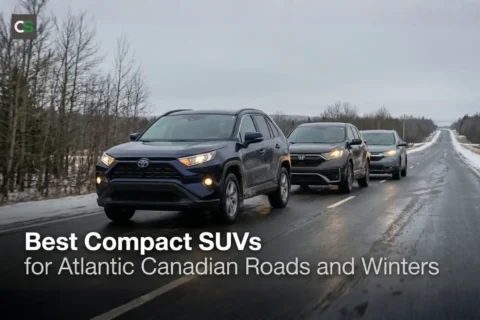
Best Compact SUVs for Atlantic Canadian Roads and Winters

best compact suvs for-atlantic canadian roads and winters

Atlantic Canadian drivers require compact SUVs capable of driving through black ice, heavy road salt, and severe potholes unique to Nova Scotia, New Brunswick, PEI, and Newfoundland. This 2026 guide ranks the top five compact SUVs for Maritime conditions. The list includes the Toyota RAV4, Honda CR-V, Mazda CX-5, Subaru Crosstrek, and Chevrolet Trax. Buyers must evaluate all-wheel drive reliability, rust resistance, and suspension durability. CreditShift Auto Solutions finances these specific vehicles for buyers with any credit score.

Why choose these SUV vehicles for Atlantic Canadian Roads and Winters?

Living in Atlantic Canada means your vehicle works harder than almost anywhere else in the country. From the salt-coated streets of Halifax to the icy backroads of rural New Brunswick and the fog-heavy coastal routes of Newfoundland, every drive is a test. 

You need an SUV that can take a hit from a February pothole on Robie Street, resist the rust that saltwater air loves to kick-start, and still get you home warm and in one piece after a freezing rain storm.

Here we break down the best compact SUVs in Atlantic Canada for 2026, with real information on what each model handles well in our specific conditions.


1. Toyota RAV4 – Best for Resale and AWD Reliability

Red Toyota RAV4

If you ask anyone in Halifax what SUV they would trust for an East Coast winter, the RAV4 is almost always the first answer. 

It is Canada’s best-selling compact SUV for a reason. The AWD compact SUV community in Nova Scotia has long trusted the RAV4 for its dependable all-wheel drive, low maintenance costs, and strong resale value.

The 2026 RAV4 is now fully electrified, available only as a Hybrid (HEV) or Plug-in Hybrid (PHEV). 

The hybrid system produces 236 horsepower with standard electronic on-demand AWD. 

On wet pavement, gravel roads near Truro, or icy surfaces near Moncton, the system sends power to whichever wheels have grip, automatically and silently.

Feature 2026 RAV4 Hybrid Detail
AWD System Electronic on-demand, standard on all grades
Horsepower 236 hp (5th-gen hybrid system)
Fuel Economy (est.) 6.0 L/100 km combined
Starting Price (CA) $39,000+
Rust Protection Factory galvanized + plastic shields on underbody
Ground Clearance 8.4 inches (gas) / approx. similar on hybrid
Wait Time (2026 HEV) Approx. 12+ months at many dealers

Toyota RAV4 Hybrid Wait Times in Atlantic Canada: The 2026 RAV4 Hybrid is in very high demand. Many Canadian Toyota dealers are reporting wait times of 12 months or more for the HEV trim. If you cannot wait, a certified pre-owned 2023 or 2024 RAV4 Hybrid is a smart alternative and can be financed today through CreditShift.

The Toyota RAV4 hybrid wait-time issue in Atlantic Canada is real. Nova Scotia Toyota dealers like O’Regan’s in Dartmouth and Amherst Toyota have confirmed limited 2026 stock. 

If you want one now, your best move is to explore used inventory through a financing partner like CreditShift, which has access to 6,000+ vehicles across 100+ Atlantic Canada dealers.


2. Honda CR-V – Best for Cargo Space and Family Driving

White Honda CR-V

The Honda CR-V is the closest rival to the RAV4 and, depending on your priorities, might actually be the better pick for families in Fredericton, Charlottetown, or St. John’s. 

It offers more rear passenger room and a more flexible cargo area than most compact crossovers, making it one of the top picks in the compact crossover ratings category for families.

Every CR-V is built in Canada, which also means parts availability is excellent across Atlantic dealership networks. 

The turbocharged base engine produces 190 horsepower and can achieve combined fuel consumption below 8 L/100 km, which is impressive for a family-sized SUV.

  • Cargo Space: 1,101 litres behind rear seats, top in its class.
  • Honda Sensing Suite: Standard across all trims, includes collision avoidance and lane assist.
  • AWD Availability: Available on all trims, with real-time torque vectoring in slippery conditions.
  • Hybrid Option: CR-V Hybrid uses a two-motor system for smooth, quiet winter starts.
  • Starting Price: $39,998 for base LX trim (2026)

For winter driving SUVs, East Coast buyers with kids, hockey gear, and a week’s worth of groceries, the CR-V hits a sweet spot that is hard to beat.


3. Mazda CX-5 – Best for Handling and Premium Interior

Red Mazda CX-5

The Mazda CX-5 feels like a much more expensive vehicle than it actually is. Its interior uses soft materials, real stitching, and a clean layout, making it the nicest-feeling cabin in the non-luxury compact SUV segment. 

But beyond looks, it drives differently from the competition.

When comparing Subaru Forester vs Mazda CX-5 winter driving, the CX-5 wins on handling and road feel, while the Subaru edges ahead on ground clearance. 

For highway driving between Moncton and Fredericton, or navigating the winding roads near Baddeck, Nova Scotia, the CX-5 feels planted and confident in a way that most compact SUVs do not.

Mazda’s i-Activsense safety suite is standard across all CX-5 trims. This includes Smart City Brake Support, Blind Spot Monitoring, and Lane Departure Warning. 

The CX-5 has also consistently earned IIHS Top Safety Pick+ awards, which matters a lot when black ice is a weekly reality on East Coast roads.

Spec Mazda CX-5 (2025/2026)
AWD i-ACTIV AWD Standard on most trims
Turbocharged Option 2.5T engine: 256 hp (premium fuel)
Interior Quality Highest in class (non-luxury segment)
IIHS Rating Top Safety Pick+
Starting Price (CA) $33,800

The CX-5 is also one of the most reliable compact SUVs for maritime winters according to long-term owner surveys in Canada, with low ownership costs and a reputation for holding up well under annual salting and hosing-down cycles.


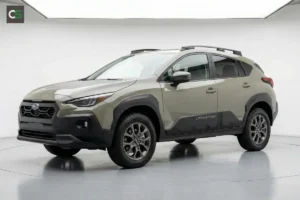
4. Subaru Crosstrek – Best for Deep Snow and High Ground Clearance

Subaru Crosstrek

For drivers in rural areas, like the farming communities around Amherst or the forested backroads near Grand Falls, NB, the Subaru Crosstrek is in a category of its own. 

It has the highest ground clearance in this group (8.7 inches), a full-time symmetrical AWD system, and a ride height that lets you float over the kind of snow ruts that would scrape the bottoms out of most compact SUVs.

The 2026 Crosstrek now comes standard with a 2.5-litre engine after Subaru dropped the base 2.0-litre, resulting in noticeably better real-world performance on highway hills. 

This makes it genuinely useful as a daily driver, not just a weekend trail machine.

For buyers asking which compact SUV is best for snow in Nova Scotia, specifically in rural or semi-rural contexts, the Crosstrek wins easily. 

Its Lineartronic CVT handles deep snow better than most competitors’ standard automatics, and the AWD system never switches off. It is always working, in every condition.

  • Ground clearance: 8.7 inches (best in this group)
  • Symmetrical full-time AWD: Always active, not on-demand
  • IIHS Top Safety Pick+ and Best Buy Award winner for 2026
  • EyeSight Driver Assist standard across all trims
  • Starting price: $28,000, most affordable on this list

For Cape Breton, rural PEI, or western Newfoundland drivers who deal with unplowed secondary roads in January, the Crosstrek is your most capable and budget-friendly option in this group.


5. Chevrolet Trax – Best Budget Subcompact for Halifax Commuters

Chevrolet Trax

Not everyone needs a full-size compact SUV. If you are a single person or a couple commuting in Halifax, Dartmouth, or Moncton, the Chevrolet Trax does almost everything the bigger vehicles do at a much lower price. 

The redesigned Trax is a proper modern subcompact, with a genuine 11-inch touchscreen, standard wireless Apple CarPlay and Android Auto, and a roomy-for-its-size interior.

Important note for winter buyers: The Trax is only available with front-wheel drive. It makes it less ideal for rural winter conditions or areas with heavy snowfall, but for city commuters who park indoors and rely on cleared main roads, it is a practical and affordable option that is easy to finance, even with bad or thin credit.

Feature Chevrolet Trax LT
Drive Front-Wheel Drive only
Engine 1.2L Turbocharged 3-cyl, 137 hp
Infotainment 11-inch touchscreen, Google Built-In
Starting Price (CA) $23,000
Best For City driving, first-time buyers, budget financing

For first-time buyers, newcomers to Canada, or anyone working to rebuild credit, the Trax is one of the easiest vehicles to get approved for through subprime SUV financing programs. Monthly payments are lower, meaning lenders see less risk and approvals come faster.


The Road Salt Factor: Why Rust Resistance Matters in Nova Scotia

Automotive expert Doug Bethune, quoted in a CBC report, noted that auto manufacturers actually refer to Nova Scotia as “the rust capital of Canada.” 

That is not a title anyone wants, but it is one that every vehicle buyer in the Maritimes needs to understand before they sign a car loan.

Why is Atlantic Canada so hard on vehicles? 

It comes down to three things happening at once and are road salt is used heavily on every paved surface from November through April, the coastal air carries salt year-round even on dry days, and the freeze-thaw cycle (common in Halifax winters that swing between -10C and +4C) forces water into every tiny crack, where it freezes, expands, and breaks things apart.

Here is how the five SUVs in this guide compare for rust resistance:

SUV Rust Protection Grade Key Protection Feature
Toyota RAV4 Excellent Factory galvanized body panels + plastic underbody shields
Honda CR-V Excellent Zinc-coated body panels, Honda corrosion warranty coverage
Mazda CX-5 Very Good Skyactiv body construction with extensive anti-corrosion coating
Subaru Crosstrek Very Good Galvanized steel, symmetrical AWD protects underbody exposure
Chevrolet Trax Good Standard corrosion protection, recommend aftermarket undercoating

No matter which vehicle you choose, get an annual professional undercoating at your nearest service centre in Halifax. 

Local experts like those at Portland Rust Check in Dartmouth recommend applying rust protection every fall. 

A quality undercoat treatment typically costs under $700, while ignoring it can mean $1,000+ in floorboard repairs down the road.

Also, wash your vehicle’s undercarriage every two weeks in winter. Halifax’s HRM uses both road salt and brine solution on streets, both of which cling to your underbody and accelerate corrosion every single day they sit there.


Fuel Efficiency vs. Heating Power: Evaluating Hybrid Performance

A common question from Atlantic Canadian buyers is whether a hybrid SUV can handle real winters. The short answer is yes, reliably so, but it helps to understand what actually happens to a hybrid in the cold, so there are no surprises.

What cold weather does to a hybrid battery: Cold temperatures slow the chemical reactions inside lithium-ion and nickel-metal hydride batteries. This means your hybrid SUV might rely more on its gas engine in January than in July. Fuel economy drops. This is normal and expected. The battery performance fully returns once it warms up, usually within the first few kilometres of driving.

According to battery research from Greentec Auto Canada, Canada’s cold climate is actually better for long-term hybrid battery health than hot climates like Texas or Florida. 

Heat causes permanent capacity loss. Cold causes only temporary performance reductions. Your hybrid battery in Halifax is likely to last longer than the same battery would in Miami.

Scenario Fuel Economy Impact What to Do
Temps between 0C and -10C 5-15% efficiency reduction Normal driving, slight increase in gas use
Temps between -10C and -20C 15-25% efficiency reduction Pre-warm if plugged in, gentle start
Short trips under 5 km Efficiency drops sharply Combine errands, let the engine warm up
Highway driving in cold Minimal impact on RAV4/CR-V hybrid Both models manage well at highway speeds
Cabin heating demands Increases fuel use 10-20% Use seat heaters instead of full fan heat

When Halifax buyers compare fuel-efficient SUVs, they most often compare the RAV4 Hybrid to the CR-V Hybrid. Both are excellent cold-weather performers. 

The RAV4 Hybrid’s fifth-generation system in 2026 runs more efficiently and produces more power, but the CR-V Hybrid is smoother and quieter at low speeds. 

Both will realistically average 7-9 L/100 km in an Atlantic Canada winter, compared to 11-13 L/100 km for a comparable gasoline-only SUV.

For plug-in hybrid buyers, both the RAV4 PHEV (80 km electric range) and the CR-V PHEV are good fits for city driving in Halifax. 

If your daily commute is under 60 km, you may rarely use any gasoline at all from Monday through Friday.


Potholes and Suspension: The Best SUVs for Halifax Streets

Halifax roads are genuinely rough.
In early 2026, CBC News reported that pothole repair requests in Halifax jumped to 737 in just the first month of the year, a sixfold increase over the same period in 2025. 

The culprit is the freeze-thaw cycle. Water seeps into road cracks, freezes, expands, and causes the pavement to break apart. 

Cold-patch asphalt used in winter repairs is only temporary, and some holes get filled two or three times before a permanent fix is possible in spring.

A pothole can damage tires and bent rims at low speed, and break suspension components at highway speed. 

For a vehicle expected to last 10-12 years in the Maritimes, suspension durability is not optional.

Here is how each SUV handles repeated pothole impacts:

  • Toyota RAV4: MacPherson front / double-wishbone rear. The 2026 reinforced TNGA-K platform adds structural rigidity specifically to reduce micro-vibrations and impact harshness. Rated best in class for long-term suspension durability.
  • Honda CR-V: Independent suspension all around. Smooth and well-tuned, it absorbs sharp road inputs well. One of the quietest rides when crossing broken pavement.
  • Mazda CX-5: G-Vectoring Control+ technology makes the suspension more reactive and controlled. Less impact isolation than the CR-V but better handling over uneven surfaces.
  • Subaru Crosstrek: Higher ride height means it clears larger potholes entirely. The 8.7-inch clearance is a genuine advantage on rutted secondary roads.
  • Chevrolet Trax: Softer tune, comfortable in the city. Ride quality is good for urban commuting but less robust for rural or heavily potholed routes.

If you regularly commute on roads like Bayers Road, Robie Street, or Wyse Road in Dartmouth, any of the top four on this list will handle the wear. 

The Subaru Crosstrek stands out on rural routes because its ground clearance lets it step over obstacles others cannot.


Financing a Compact SUV in Atlantic Canada with Bad Credit

One of the most common questions we get is, “Can I get approved for one of the best compact SUVs in Atlantic Canada if my credit is not great?” 

The answer is yes, and here is exactly how it works.

Traditional banks and dealerships often look at your credit score first and ask questions later. A score below 600 usually means no, or an interest rate that feels more like a punishment. 

CreditShift works differently. We send your application to every major Canadian auto lender at once, so your file goes to lenders that specialize in subprime SUV financing, not just those that want pristine credit.


What Lenders Actually Look At For Bad Credit Approvals

  • Monthly income (minimum is typically $1,800 per month before deductions)
  • Employment stability (full-time, part-time, self-employed, and EI are all considered)
  • Down payment (even $0 down is possible, but a small down payment improves terms)
  • Length of time at current address and current employer.
  • The vehicle itself: used compact SUVs under $30,000 are easiest to finance with bruised credit.

What Does Bad Credit Financing Actually Cost? 

A real example:

Scenario Good Credit (700+) Fair Credit (580-650) Bad Credit (Below 580)
Vehicle Price $24,000 $24,000 $24,000
Interest Rate (est.) 6.5% 12-15% 18-24%
Term 60 months 60 months 72 months
Monthly Payment (est.) $466 $536-$566 $600-$650
Total Interest Paid $3,960 $8,160-$9,960 $14,400-$18,800

Even a 1-2% rate reduction makes a real difference over 60-72 months. CreditShift submits your application to 18+ lenders simultaneously, so you get competing offers, not just the first rate one dealer can find.

The good news about the best used AWD SUVs for bad credit in Halifax is that you do not need to settle for an unreliable vehicle. 

CreditShift’s dealer network includes 100+ independent dealers across Atlantic Canada with thousands of quality used vehicles. 

A 2021 or 2022 Subaru Crosstrek, Honda CR-V, or Mazda CX-5 can easily fall into a budget that works even at higher interest rates.

  • The credit-building bonus: Every biweekly payment you make on your car loan is reported positively to Equifax and TransUnion. In as little as 10-12 months of on-time payments, many CreditShift clients in Halifax, Moncton, and Charlottetown see their credit scores jump by 50-100 points. That means better rates on your next vehicle, or even a mortgage down the road.
  • How to get started: The CreditShift pre-approval takes about two minutes online. No impact on your credit score. Once approved, a CreditShift representative will contact you to match you with vehicles within your budget across our Atlantic Canada dealer network, with delivery straight to your door.

Conclusion

Choosing the right vehicle for Atlantic Canada is not the same as choosing one in Calgary or Toronto. The salt, the potholes, the coastal air, and the hard winters mean you need a vehicle that was built (or at least inspected) to last. 

The best compact SUVs in Atlantic Canada in 2026, whether you go with the trusted RAV4, the family-friendly CR-V, the driver-focused CX-5, the deep-snow-ready Crosstrek, or the budget-smart Trax, all offer genuine capability for maritime roads when properly maintained.

The most important thing is getting into the right vehicle for your life and budget. If you do not have perfect credit right now, that does not need to stop you. 

CreditShift was built specifically for Atlantic Canadians who want a reliable vehicle, a fair approval, and a real path to building their credit one biweekly payment at a time.

If you are leaning toward a hybrid model like the RAV4 or CR-V, it is also worth learning about Hybrid SUV Financing in Atlantic Canada.

It breaks down exactly how approval works for hybrid vehicles when your credit is less than perfect, what lenders look for, and how to get the best possible rate on a fuel-efficient SUV in the Maritimes.

Apply online in two minutes at creditshift.ca. No impact on your credit score. A real person will call you back to talk about your options.

Ready to get pre-approved? 

Apply online to get pre-approved or call 902-700-6902.


Frequently Asked Questions on Best Compact SUVs for Atlantic Canadian Roads and Winters

Which compact SUV is best for snow in Nova Scotia?

The Subaru Crosstrek provides the best symmetrical all-wheel drive system for deep snow in rural Nova Scotia. The Toyota RAV4 and Honda CR-V offer excellent on-demand all-wheel drive systems for driving on cleared city streets in Halifax.

Are hybrid SUVs reliable in Atlantic Canadian cold weather?

Hybrid SUVs function reliably in Atlantic Canadian cold weather. Battery efficiency drops in extreme cold. The core battery health remains stable. Buyers should pre-warm the cabin while the vehicle remains plugged in to maximize winter fuel efficiency.

Do bad credit dealerships in Halifax finance used compact SUVs?

CreditShift works directly with specialized lenders to approve used compact SUVs in Halifax. Buyers with bruised credit secure financing for vehicles under 30,000 dollars. Consistent monthly income overrides low credit scores during the approval process.

Which compact SUV rusts the least from Maritime road salt?

Toyota and Honda vehicles feature strong factory rust protection. Maritime road salt destroys factory coatings over time. Buyers must schedule an annual professional undercoating to protect the vehicle frame from harsh coastal salt air.

What is the average wait time for a new Toyota RAV4 in Nova Scotia?

Nova Scotia dealerships report wait times exceeding 12 months for new Toyota RAV4 hybrid models. Buyers bypass these delays by purchasing certified pre-owned models. CreditShift provides immediate financing for available used RAV4 inventory in Atlantic Canada.

How to Get a Free Car History Report in Nova Scotia: 2026 Guide

man showcasing free car history report in nova scotia in a mobile with the used car

The Insurance Bureau of Canada VIN Verify tool provides a free car history report in Nova Scotia. This database identifies non-repairable, flood-damaged, or salvaged vehicles. The Transport Canada recall database locates open safety notices using the vehicle identification number. Both government systems operate at zero cost. Paid Carfax Canada reports reveal full accident histories, lien status, and ownership transfers. Free checks establish a necessary baseline. Buyers must pair any VIN search with a physical inspection before purchasing a used vehicle.

How to Run a Free VIN Check in Nova Scotia

Your vehicle’s VIN is a 17-character code stamped on the dashboard, near the driver’s side windshield. It is also on your registration documents. You can use it to run a free car history report in Nova Scotia through two government-backed tools right now, at no cost.

Step 1: The Insurance Bureau of Canada (IBC) VIN Verify Tool

The IBC VIN Verify tool is the most important free check available to buyers in Atlantic Canada. It is run by the Insurance Bureau of Canada, which is the national industry association for Canada’s private home, auto, and business insurers.

    • What it checks: The IBC database flags vehicles that have been branded as Non-Repairable, Salvage, Flood-damaged, or Fire-damaged by a participating member insurance company. It covers Alberta, Ontario, and all Atlantic Provinces, including Nova Scotia.
    • What Non-Repairable means: A non-repairable vehicle can never legally be registered and driven on any Canadian road again. It was so severely damaged by collision, fire, or flood that no amount of repair can make it roadworthy. Fraudsters buy these vehicles cheaply and attempt to sell them as drivable cars. The IBC tool stops that.

How to use it:

  1. Visit the official IBC website and accept the terms of use.
  2. Enter the 17-digit VIN to verify the vehicle status in the non-repairable database.
  3. The system returns instant results. The IBC tool displays only the vehicles reported by member insurers. Out-of-pocket repairs remain hidden.

Step 2: Transport Canada Recall Database

The Transport Canada recall database is a free government tool that shows whether a vehicle has been recalled by its manufacturer due to a safety defect. 

It is completely separate from accident history. A recall means the manufacturer itself identified a problem and issued a repair notice.

Why This Matters In Nova Scotia

Atlantic winters are hard on vehicles. Some of the most common recalls involve brake systems, rust on structural components, and electrical issues from moisture exposure. Buying a vehicle with an open recall means you are buying one that the manufacturer has flagged as unsafe in its current state.

How To Use It

  1. Search the Transport Canada website for “vehicle recalls”.
  2. Enter the 17-digit VIN to review open safety notices, or search by year, make, and model.
  3. Confirm repair completion with the seller.

Authorized dealerships fix open recalls for free. Buyers hold leverage to demand these repairs before signing any purchase agreement.


Free VIN Checks vs. Paid Carfax Reports: Understanding the Difference

A free VIN check, Halifax buyers commonly run through IBC or Transport Canada, is a starting point, not a finishing line. Here is an honest look at what each option gives you.

Feature IBC VIN Verify (Free) Transport Canada (Free) Carfax Canada (Paid)
Cost $0 $0 $50.95 to $69.95
Non-repairable / Salvage brands Yes No Yes
Open safety recalls No Yes Yes
Accident history No No Yes (if reported)
Lien/loan check No No Yes (add-on)
Ownership transfers No No Yes
US history No No Yes
Odometer records No No Yes
Covers Atlantic Canada Yes Yes Yes

A good Carfax alternative for Canadian buyers is VinAudit Canada, which offers reports for $14.95 per vehicle. 

VinAudit covers registration records, recall records, theft records, and manufacturer buyback history. It is a budget-friendly middle ground between a free check and a full Carfax report.

Paid reports are only as good as what they’re given to report. An accident that was never reported to insurance or a private repair done without documentation will not appear on any report, free or paid. That is why physical inspections still matter.


Access Nova Scotia Registry Rules for Branded and Rebuilt Titles

When a vehicle is severely damaged in Nova Scotia, the Registry of Motor Vehicles (RMV) assigns a brand to its title. 

This brand travels with the vehicle permanently. Understanding these brands is critical to checking if a car has been in an accident for free in Nova Scotia using official records.

Nova Scotia uses the following title brands under the Motor Vehicle Act:

Brand What It Means Can It Be Driven?
Salvage Insurance declared it a total loss No, until repaired and inspected
Rebuilt Was salvage, now repaired and passed provincial inspection Yes, but history must be disclosed
Non-Repairable Damage so severe that it can never be roadworthy again Never illegal to register
Normal No branded status on record Yes


How To Spot A Rebuilt Title In NS?

Service Nova Scotia and the RMV manage the provincial vehicle registry. Contact Access Nova Scotia directly to confirm the title brand status. The official registration certificate displays this brand. Sellers must disclose rebuilt titles. Insurers hesitate to cover these vehicles; lenders refuse to finance them. 

Criminals move cars between provinces to erase branded histories. A non-repairable vehicle from New Brunswick often enters Nova Scotia for re-registration with altered documentation. The IBC prevents this fraud by tracking the permanent VIN.


The Reporting Lag: Why Clean Reports Hide Recent Halifax Accidents

It is one of the most overlooked facts about vehicle history reports, and it is especially relevant for buyers doing a free car history report in Nova Scotia

Even Carfax is not real-time.


What Happens After A Car Accident In Halifax?

  • The driver contacts their insurer, usually within 24 to 72 hours, for a standard claim.
  • The insurer investigates and adjudicates the claim, which can take days to weeks for complex collisions.
  • Once settled, the insurer reports the claim data to providers like Carfax Canada and the IBC database.
  • Carfax and IBC update their records, but there is no mandated real-time transfer.
  • Some accidents involving minor damage are repaired out of pocket and never reported.

The result?

A vehicle involved in a collision on Robie Street in Halifax last month could still show a clean report today. It may not have been processed and reported yet.

Additionally, private sellers sometimes pay for bodywork or mechanical repairs without filing a claim. 

Cash repairs leave no paper trail on any history report, free or paid. According to Canada Drives, it is one of the most common reasons a vehicle history report should never be your only due diligence step.

The Nova Scotia Motor Vehicle Act also requires a Motor Vehicle Inspection (MVI) for most used car private sales, no more than 30 days before the sale. 

Always ask for the MVI number. 

If the seller cannot provide one, that is a warning sign.


Pre-Purchase Inspections: The Ultimate Alternative to Paper Reports

No report, free or paid, can replace a mechanic putting the vehicle on a lift. A qualified technician can spot fresh welds on a repaired frame, mismatched panel gaps from a collision repair, signs of underbody corrosion from Nova Scotia’s notorious road salt, or water staining inside the engine bay from flood exposure.

What a pre-purchase inspection covers:

  • Frame and structural integrity check, looking for signs of prior collision repair.
  • Underbody rust and corrosion inspection is critical in Nova Scotia’s salt-heavy winters.
  • Engine and transmission health, including oil condition and fluid leaks.
  • Brake system inspection, pads, rotors, lines, and callipers.
  • Electrical system check, especially important for used hybrids and vehicles that have been exposed to moisture.
  • Suspension and steering components, worn parts common on Halifax’s potholed roads.
  • Tire condition and alignment check.

Independent mechanics in Halifax charge between $100 and $200 for a standard pre-purchase inspection. CAA-approved centres in Dartmouth and Bedford offer similar diagnostic services. A seller refusing an independent inspection signals severe mechanical issues.

Sellers who refuse to allow a pre-purchase inspection are a red flag. A seller with nothing to hide will always say yes.


Why CreditShift Dealers Provide Free 150-Point Inspections and Carfax Reports

One of the most common questions from used-car buyers in Halifax is whether Halifax dealerships offer free Carfax reports. 

The answer depends entirely on who you buy from.

At CreditShift, every vehicle in our Atlantic Canada dealer network of 100+ independent dealers comes with a Carfax Canada report included. You do not need to pay $50.95 to find out what you are buying. You get full transparency before you commit.


What Creditshift Vehicles Include As Standard?

  • Full Carfax Canada Vehicle History Report: Accident history, ownership transfers, lien status, recall records, and Canadian and US history.
  • 150-Point Vehicle Inspection: A comprehensive mechanical and safety check is completed before any vehicle enters our network inventory.
  • Warranty Coverage: Optional warranty and walk-away insurance for additional peace of mind
  • Nova Scotia MVI Compliance: All vehicles meet Motor Vehicle Inspection requirements, no surprises at registration.
  • Home Delivery Across Atlantic Canada: We deliver directly to your door in Halifax, Dartmouth, Moncton, Charlottetown, or St. John’s

Do Halifax Sackville Drive dealerships provide free Carfax reports? Some do, some do not. 

Always ask before you agree to anything. If a dealership hesitates or charges you separately for a history report that they should absorb as a cost of doing business, that tells you something about how they operate.

The entire CreditShift model was built to take the guesswork and the risk out of buying a used vehicle in Atlantic Canada. 

Whether your credit is excellent or you are rebuilding from scratch, you deserve full information about any vehicle you are asked to finance.


Conclusion

A free car history report in Nova Scotia is one of the smartest things you can do before buying a used vehicle. 

The IBC VIN Verify tool and Transport Canada recall database cost you nothing and can save you from buying a vehicle that is legally undrivable or has a dangerous open safety defect.

But free tools have limits. They cannot show you accident history, liens, or recent damage that has not yet been reported. 

A paid Carfax or VinAudit report fills in much of that gap. And a physical pre-purchase inspection, done by a trusted mechanic in Halifax or your nearest town, fills in the rest.

The safest and easiest path for most Nova Scotians is to buy through a network like CreditShift, where every vehicle comes with a Carfax report and a 150-point inspection included, at no extra cost and with no assumptions.

And if financing is a concern because your credit is not perfect right now, that does not have to stop you. 

To understand exactly what lenders look at and what score you actually need, take a look at the credit score you actually require for a car loan in Canada

It answers the question more honestly than most handbooks do.

Ready to find a verified, inspected used vehicle in Nova Scotia? 

Apply now or call 902-700-6902 for a free two-minute pre-approval.


Frequently Asked Questions on How to Get a Free Car History Report in Nova Scotia in 2026


Does Access Nova Scotia provide free vehicle history reports?

No. Access Nova Scotia confirms title brands only. For a full accident and lien history, use paid Carfax Canada or VinAudit.

How do I check for a rebuilt title in Nova Scotia?

Use IBC VIN Verify, contact Access Nova Scotia directly, or order a paid Carfax Canada report to confirm any branded history.

Are free VIN checks accurate for Canadian used cars?

The government databases provide accurate data with strict limits. Free searches identify salvage brands and safety recalls. They miss minor accident records, financial liens, and unreported physical damage.

Do Sackville Drive dealerships provide free Carfax reports?

Some do, some do not. Always ask first. CreditShift includes Carfax reports on every vehicle in its dealer network.

How long does the IBC take to report an accident?

No fixed timeline. It typically takes a few weeks to several months after a claim is settled and submitted.

Can I check a VIN from a license plate in NS?

Yes, but privacy rules apply. Ask the seller directly for the VIN, then run it free through IBC and Transport Canada.

What is the difference between a salvage and a rebuilt title?

Salvage means total loss, not road-legal yet. Rebuilt means repaired, inspected, and re-registered. Both must be disclosed by sellers.

What happens if I buy a title-washed car in NS?

The vehicle can be seized, your insurance can be voided, and you can lose value. Report fraud to Nova Scotia RCMP and Consumer Protection NS.